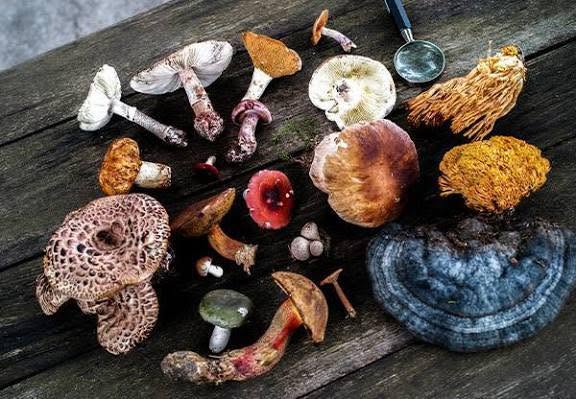
I'm often asked about popular medicinal mushrooms like reishi, chaga, lion's mane, and cordyceps, among others. What does Ayurveda actually say about them?
In the classical Ayurvedic tradition, these mushrooms are not found in historical texts, as they primarily grow in different climate zones than India. However, as Ayurveda is a living system, it integrates new knowledge based on its philosophy.
So what does Ayurveda say in practice?
Mushrooms are often seen as tamasic – they can create sluggishness, heaviness, and cloudiness if used incorrectly. At the same time, certain mushrooms have a powerful adaptogenic effect, meaning they can help the body adapt to stress. This can be very valuable, but Ayurveda advocates for targeted interventions rather than long-term use.
Mushrooms can therefore be used as an “interruption” in a pattern, to restore balance but not as a daily routine for all doshas.
When used wisely:
- Can they support ojas (life energy) during recovery
- Can it support agni (digestive fire) for short periods
- Can one remain calm under stress, especially during transitional periods
But they can also:
- Weakening digestion if agni is low
- Create inertia and ambiguity upon overdose
- Disrupting the doshas if used carelessly
Ayurvedic guidance is always individual, therefore it is important to know your dosha and consult with a knowledgeable therapist before including mushrooms in your lifestyle.
Summary
Medicinal mushrooms can be valuable tools, but they should be used with respect and consideration, never as a substitute for a balanced lifestyle.