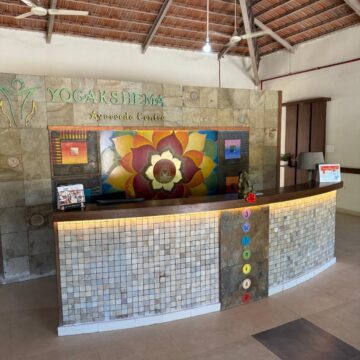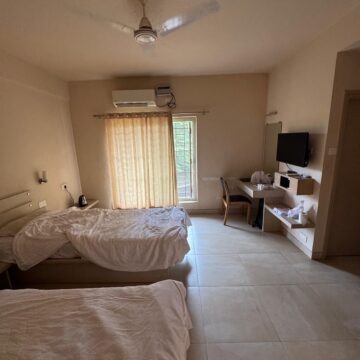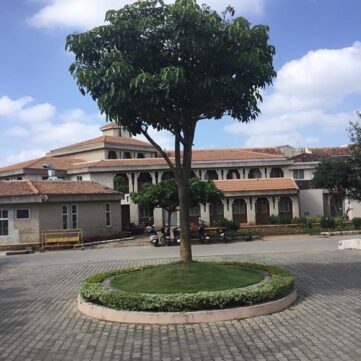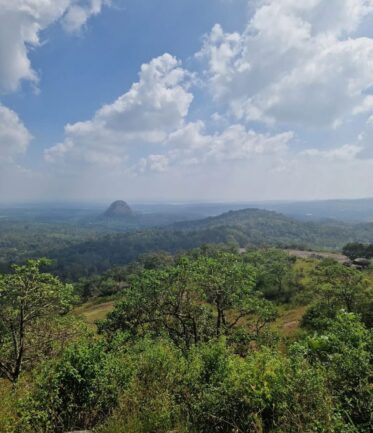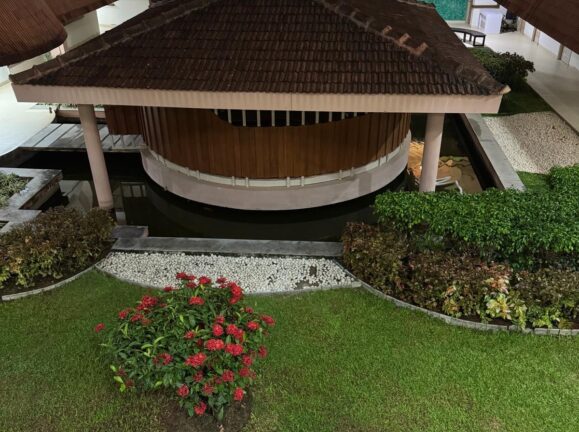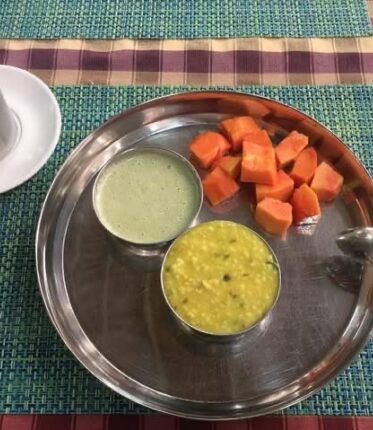
At YAC India, an authentic and deeply healing Panchakarma is offered, performed according to classical Ayurvedic tradition. The campus is ranked 4th in all of India – for two years in a row – among over 3,000 Ayurvedic institutions, reflecting quality, expertise, and extensive experience.
Here you will receive a personalised Panchakarma that supports deep purification, balancing of the doshas, and rebuilding of life force (Ojas), in an environment characterised by professionalism, presence, and a holistic view.
Let yourself be inspired by Albena's Panchakarma journey.
What does it actually feel like to undergo a 21-day Panchakarma at YAC in Hassan, India?
Every journey is unique, but Albena generously shares her experiences, offering a beautiful insight into how a Panchakarma can affect both body and mind.
Check out her Instagram story here.
Price list
7 nights
35,000 INR
14 nights
£70,000
21 days
£1,050.00
Currency Converter INR/SEK: Fri, 16 Oct.
All-inclusive Panchakarma – What's included
- Panchakarma for 7, 14, 21 or 28 nights
- Accommodation
- All Ayurvedic meals (vegetarian)
- Daily consultations with Ayurvedic doctors
- Two daily treatments
- Detox day(s)
- Daily morning and evening yoga and meditation sessions
Clothes & practical items to bring
- Tunic
- Trousers
- Dressing gown
- Sarong
- Flip-flops for use during Panchakarma
- Flaskor och vattenflaska
Not included:
- Fly
- Transport to/from the airport is not included but can be booked via the centre.
- Travel insurance
- Visa
- Medicines
- Personal laundry service
- Other private costs
Meet your doctor
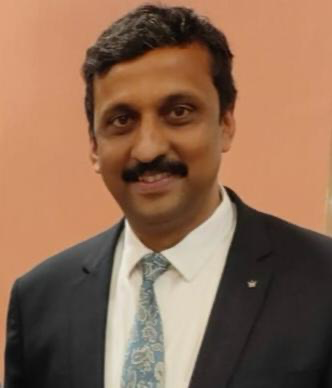
Dr Lohith B A.
Professor of Panchakarma &
Ayurvedic doctor
Dr. Lohith is one of India's most experienced experts in classical Panchakarma, with over 18 years of teaching and 17 years of clinical practice. He is a professor at SDM College of Ayurveda in Hassan and holds a Ph.D. in Panchakarma.
He has written several books, published nearly 70 research articles, and is a respected international lecturer with experience from, among others, London, Israel, Spain, and New Zealand.
Dr. Lohith combines deep traditional knowledge with modern research and is recognised as a warm, thorough and highly competent Ayurvedic doctor.
Dr Raju
BAMS + MD in Panchakarma
Dr Mithun Rama Raju Indukuri was born into a family of Ayurvedic doctors in Andhra Pradesh, India – a tradition stretching back over 500 years. From a young age, he lived close to the healing power of nature, receiving his initial guidance from his father, Professor and Dr I. Gopinadha Raju, a respected Ayurvedic doctor. For Dr Raju, Ayurveda became not just a tradition of knowledge, but a calling – a way to understand the balance between body, mind, and the rhythms of nature.
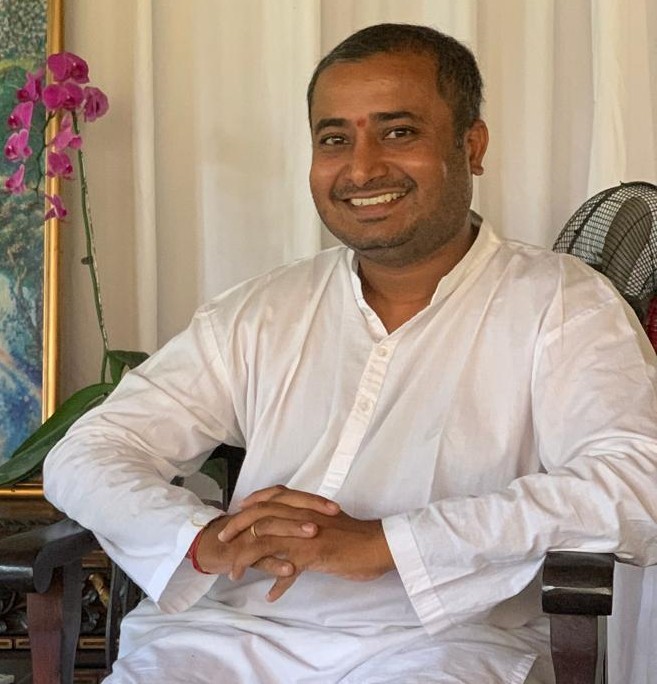
He has an extensive academic background in Ayurvedic medicine. Dr. Mithun holds a BAMS degree from the renowned SDM Ayurvedic Medical College in Hassan, as well as a specialization (MD) in Panchakarma - Ayurveda's detoxification and rejuvenation system - from Rajiv Gandhi University of Health Sciences in Bangalore. His research has focused on Ayurvedic treatment for psoriasis and chronic inflammatory skin diseases, employing a scientific methodology that includes biostatistics, evidence-based practice, and clinical evaluation.
Since 2013, including 6.5 years internationally in Bali, Dr. Raju has worked with a wide range of health conditions – including autoimmune diseases, fertility issues, stress, metabolic disorders, and chronic lifestyle-related illnesses. His international experience has strengthened his intercultural competence and patient-centred approach.
Dr Mithun's expertise in Panchakarma is complemented by yoga, pranayama (breathing exercises), and diet and lifestyle advice, making his treatment philosophy both profound and holistic. He does not just treat symptoms, but works to restore balance in the whole person.
Contact Dr Raju who is coming listens to your needs and guides you to the doctor or therapist who best suits your situation. Through his solid experience and deep understanding of both traditional and modern holistic health, he helps you embark on a journey towards true balance, energy, and well-being.
Dr. Raju is also engaged in international collaborations concerning integrative medicine and wellness programmes, including in Germany, where he works to unite Eastern healing arts with Western healthcare approaches.
What training are they undergoing?
Do they have the equivalent knowledge as Western doctors?
The degree qualification in Ayurveda is called Bachelor of Ayurvedic Medicine and Surgery (B.A.M.S.).
It is a five-and-a-half-year training programme with an intensive focus on both Ayurvedic and Western medical principles, including:
- Anatomy
- Physiology
- Pathology
- Clinical methodology
- diagnostic methods
- m.m.
A person with a Bachelor of Science in Ayurveda is called a doctor, as the education covers both Western medicine and Ayurvedic medicine.
After the Bachelor's degree, there is a three-year postgraduate course in Ayurveda.
The exam is called MD, and one can specialise in over 16 areas, for example:
- General medicine
- Surgery
- Eye diseases
- E H
- Paediatrics
- Panchakarma
- m.m.
The Indian government also offers doctoral (Ph.D.) studies in Ayurveda for those with advanced Ayurvedic degrees.
Ayurveda is a logical science based on fundamental scientific principles.
In Ayurveda, one doesn't just rely on the symptoms the patient describes, but rather carries out a thorough examination to find the underlying cause of the ailments.
According to Ayurveda, solely suppressing symptoms is not the correct approach.
A patient is considered healthy only when the underlying cause of the illness has been removed and the body is functioning normally again.
Therefore, Ayurveda focuses on finding the reason for the symptoms, instead of merely suppressing them.
To find the root cause, there are mandatory diagnostic steps.
The examination is called rogi pariksha, which means ”observation of the patient”.
In this three-part investigation, all possible causal factors are analysed in the following steps:
Inspection and observation
This is the stage of external observation. Here, various factors such as the patient's age and other physical characteristics are carefully examined.
Tactile examination
This is the stage where observation occurs through touch.
Three different techniques are used:
- palpation
- Percussion (tapping)
- Auscultation (listening)
Questioning and anamnesis
This is the stage where the doctor asks questions about the patient's complaints and the symptoms the person experiences daily.
The purpose is to synchronise the doctor's observations with the patient's own experience.
Ten-part and eight-part survey
In addition to these three examination methods, the patient also undergoes a more detailed examination to detect all possible causes for their symptoms.
These three steps are further developed in two systems:
- Dasavidha Pareeksha – the ten-part examination
- Ashtasthana Pareeksha – the eight-point examination
- Structural and functional abnormalities in the body
- Geographical home
- Physical strength
- Seasons and climatic conditions
- Patient's digestion
- The body's natural tridosha constitution
- Age
- Psychological strength
- General and personal habits (e.g. smoking, work routines, daytime sleep etc.)
- Type of food the patient prefers and usually eats
- Pulse
- Urine
- Faeces
- Tongue/taste
- Voice and speech
- Skin, touch and feeling
- Eyes and sight
- General physique
- An Ayurvedic doctor can also use modern diagnostics, as they are formally trained in such methods.
- Ayurveda is very helpful for treating and managing many lifestyle diseases, such as diabetes, obesity, and high blood pressure – even though Western medicine has no definitive cure for these conditions.
- Ayurveda advocates lifestyle changes alongside specific herbs, medications, and treatments, often in combination with yoga, to help the body restore its biological rhythm.
- (The following text is from the video testimony in the original, do you want me to translate that as well?)
- Are there scientific articles about the effectiveness of Ayurvedic treatments?
- Panchakarma detox is a fully scientifically-based method.
- Extensive research has been conducted on the mechanisms of action and effects of Panchakarma in various diseases, with the results published in recognised medical journals.
- Here are some references:
- http://www.ayujournal.org/
- http://www.jaim.in/
- Research by Kovai scientists on rheumatic patients nominated for a prestigious award
- Study linking Ayurveda and Western medicine via integrative analysis
- Practice-based evidence in Ayurveda