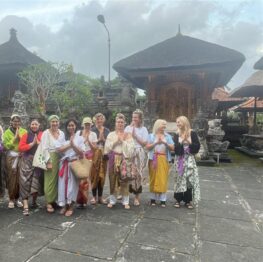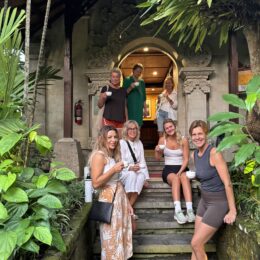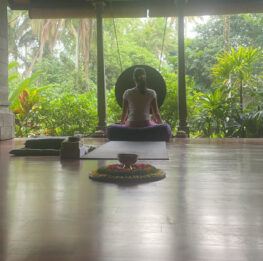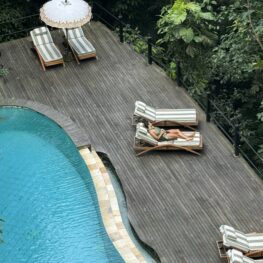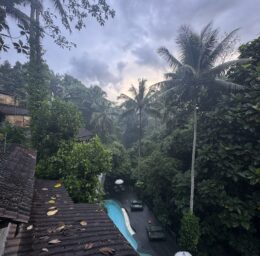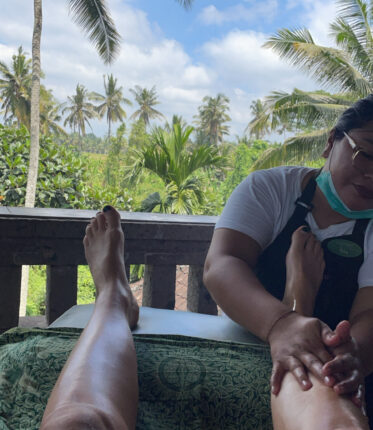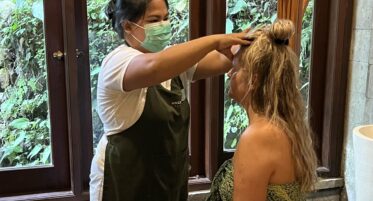
OneWorld Ayurveda in Ubud offers an authentic Panchakarma experience in a tranquil, nature-infused setting, where classic Ayurvedic wisdom meets presence, care, and a holistic perspective. Each programme is individually tailored and guided by experienced Ayurvedic doctors and therapists, focusing on deep bodily purification, dosha balancing, and the building of vitality (Ojas).
Here, space is provided for recovery, stillness, and transformation – in the heart of Bali, where nature, rhythm, and treatment together support the body's natural healing process.
On the "Read more" button above, you will be taken to Oneworld's website where you can choose between Ubud and their sister centres in Tegallalang. The only difference between them is that the latter is situated more exclusively among the rice terraces, hence a slightly higher price.
Always enter voucher code / discount code Anna Sevo for a discount at both places. Always 1 million IDR per person for every 7 days you book.
Listen to the Panchakarma retreats that guests share - fantastic results.
Here you can see all the treatments available to you during your Panchakarma at Oneworld.
Price list
In the prices above, the discount has been deducted.
Enter the code (voucher): Anna Sevo to get 1 million IDR per 7 nights.
7 nights → –1,000,000 IDR
14 nights → –2,000,000 IDR
21 nights → –3,000,000 IDR
Prices are correct at the time of publication. I reserve the right for any price changes at OneWorld Ayurveda and for the possibility that the price information on this page has not yet been updated. For current prices, please refer to the OneWorld Ayurveda website.
Currency Converter IDR/SEK: Fri, 16 Oct.
All-inclusive Panchakarma - What's included
Sunday morning
Panchakarma 7, 14 or 21 nights
Airport/South Bali Transfers
Classic Balinese accommodation in a garden with a jungle feel
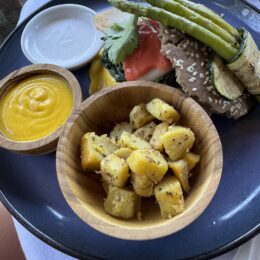
All Ayurvedic meals (vegetarian)
Daily consultations with our Ayurvedic doctors
Two daily treatments (except for the first and last day)
Detox day(s)
Daily morning and evening yoga and meditation sessions
Group Ceremony: Agnihotra Purification Ritual
Group Ceremony: “Letting-go” Ritual
Weekly excursions into the rice paddies and village walks
Afternoon activities (Ayurvedic
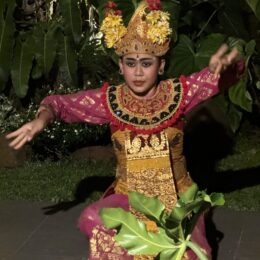
Visiting a Balinese family and a Balinese performance
VAT and service charges
PLUS – Extra included
Handmade canvas bag
Personal water bottle
Traditional Balinese sarong
Incense sticks as a memento from Bali
Comprehensive information booklet
Clothes available in your room for use during your stay
White tunic
White trousers
Dressing gown
Sarong
This garment is changed as needed
Flip-flops to wear during your Panchakarma
Not included:
Fly
Travel insurance
Visa
Personal laundry service
Other private costs
Meet your doctors
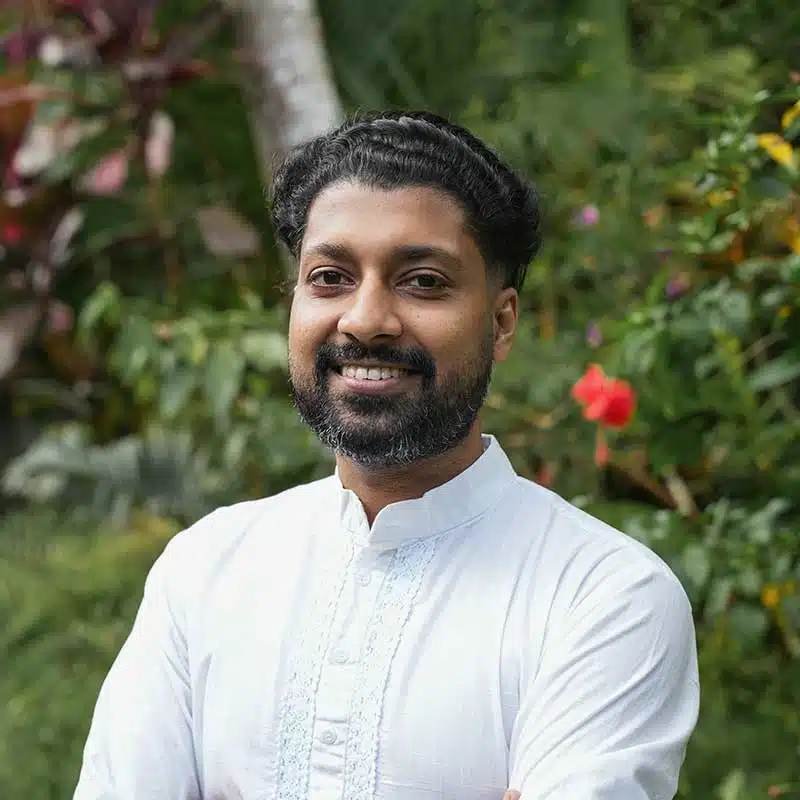
Dr Rigin K.C., BAMS
Based Ayurvedic physician at OneWorld Ayurveda Ubud.
Dr. Rigin is from Kerala in India. He obtained his Bachelor of Ayurvedic Medicine and Surgery (BAMS) degree from JSS Ayurvedic Medical College in Mysore.
After graduating, Dr. Rigin worked under the tutelage of a prominent Ayurvedic physician, where he deepened his knowledge of traditional medicines and Ayurvedic formulations.
Dr. Rigin has worked as a doctor at Sreedhareeyam Ayurvedic Eye Hospital, a pioneer in eye treatments using authentic Ayurvedic methods. There, he had the opportunity to work in various departments in several states in India.
Dr. Rigin then became the medical director at Wayanad Ayurveda, where his work also included a period as a guest consultant in Kazakhstan.
He later joined Nagarjuna Ayurveda Hospital, where he was responsible for their Hyderabad branch as Medical Officer.
Working at these institutions gave Dr. Rigin broad experience with patients from diverse backgrounds and with a wide range of health issues. This allowed him to refine his expertise in Panchakarma and other Ayurvedic treatments.
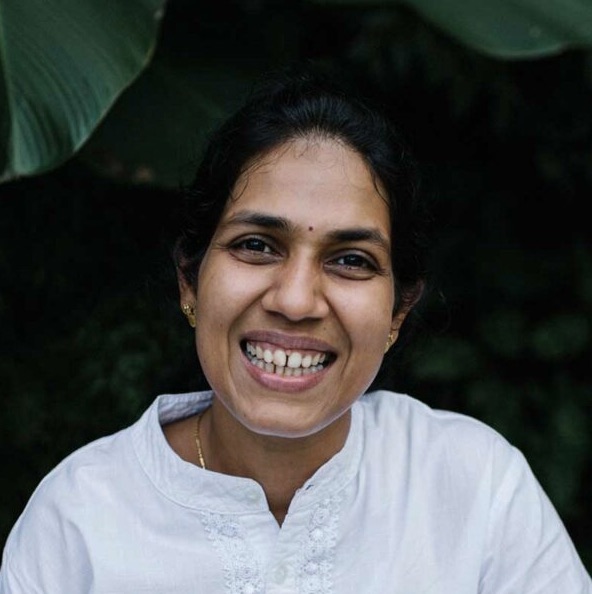
Dr. Roopika Mohandas, BAMS, Accredited Ayurvedic Practitioner
Born and raised in Kerala, India – the homeland of Ayurveda – Dr. Roopika Mohandas has dedicated her career to healing work since graduating from JSS Ayurveda Medical College in Mysore in 2015.
Her work is deeply rooted in a rich cultural tradition and has been refined through many years of extensive clinical experience.
Dr Roopika's experience encompasses working with complex inpatients and Panchakarma treatments at Nagarjuna Ayurveda, to high-volume outpatient work at Government Taluk Hospital and private clinics. This broad experience allows her to manage complex health conditions with confidence and precision.
Known for her warm and empathetic approach, Dr. Roopika believes that true healing requires both professional expertise and genuine care. Together with her husband, Dr. Rigin, she shares a passion for well-being and contributes to making the traditional wisdom of Ayurveda accessible and relevant to every patient at OneWorld Ayurveda.
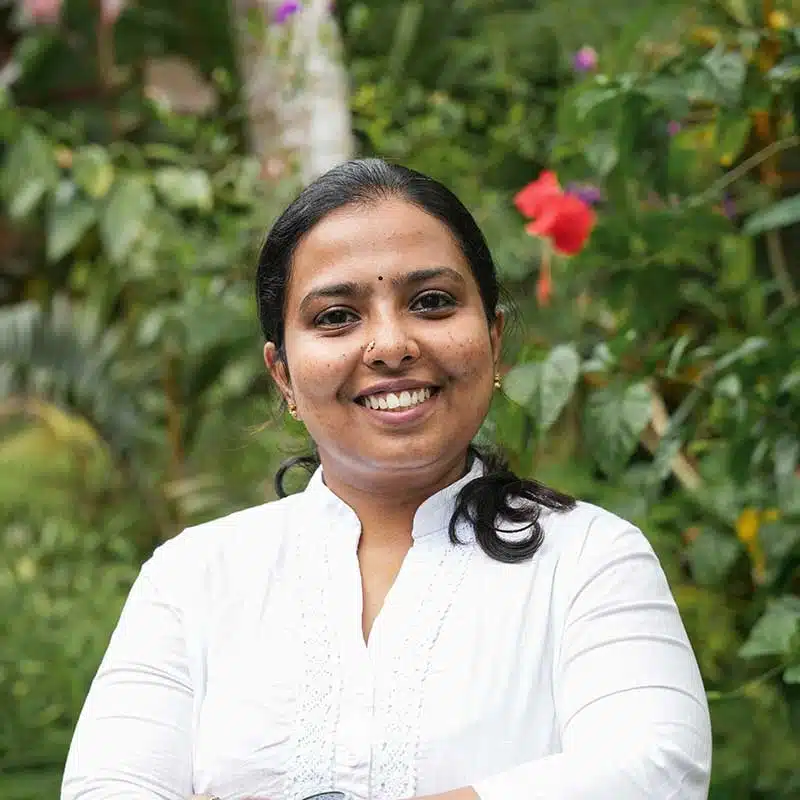
Dr. Resmi V. Rajagopal, BAMS, MS (Ayurvedic Gynaecology), PGDYN
Resident Ayurvedic Doctor at OneWorld Ayurveda Ubud
Dr. Resmi is a versatile Ayurvedic doctor from Kerala, India. She completed her Bachelor of Ayurvedic Medicine and Surgery (BAMS) at Pankajakasthuri Ayurveda Medical College and her Master of Surgery (MS) in Ayurveda Gynaecology & Obstetrics at Jamnagar College.
Dr. Resmi has presented scientific papers at national and international seminars and published research articles in reputable journals. She also holds a degree in yoga and naturopathy.
During her training, Dr. Resmi deepened her insights under Sivanandan Guruji – where she refined her skills in the analysis of Tridosha, the body's bio-energies, and also studied under leading doctors within the Ashtavaidya tradition.
She has worked as a consultant physician at Kottakkal Ayurvedic Clinic and Niramayam Retreat Centre in Kerala. Dr. Resmi has experience in clinical, surgical, para-surgical, and emergency medicine and specialises in treating women with hormonal problems and fertility challenges.
What training are they undergoing?
Do they have the equivalent knowledge as Western doctors?
The degree qualification in Ayurveda is called Bachelor of Ayurvedic Medicine and Surgery (B.A.M.S.).
It is a five-and-a-half-year training programme with an intensive focus on both Ayurvedic and Western medical principles, including:
- Anatomy
- Physiology
- Pathology
- Clinical methodology
- diagnostic methods
- m.m.
A person with a Bachelor of Science in Ayurveda is called a doctor, as the education covers both Western medicine and Ayurvedic medicine.
After the Bachelor's degree, there is a three-year postgraduate course in Ayurveda.
The exam is called MD, and one can specialise in over 16 areas, for example:
- General medicine
- Surgery
- Eye diseases
- E H
- Paediatrics
- Panchakarma
- m.m.
The Indian government also offers doctoral (Ph.D.) studies in Ayurveda for those with advanced Ayurvedic degrees.
Ayurveda is a logical science based on fundamental scientific principles.
In Ayurveda, one doesn't just rely on the symptoms the patient describes, but rather carries out a thorough examination to find the underlying cause of the ailments.
According to Ayurveda, solely suppressing symptoms is not the correct approach.
A patient is considered healthy only when the underlying cause of the illness has been removed and the body is functioning normally again.
Therefore, Ayurveda focuses on finding the reason for the symptoms, instead of merely suppressing them.
To find the root cause, there are mandatory diagnostic steps.
The examination is called rogi pariksha, which means ”observation of the patient”.
In this three-part investigation, all possible causal factors are analysed in the following steps:
Inspection and observation
This is the stage of external observation. Here, various factors such as the patient's age and other physical characteristics are carefully examined.
Tactile examination
This is the stage where observation occurs through touch.
Three different techniques are used:
- palpation
- Percussion (tapping)
- Auscultation (listening)
Questioning and anamnesis
This is the stage where the doctor asks questions about the patient's ailments and the symptoms the person experiences daily. The purpose is to synchronise the doctor's observations with the patient's own experience.
Ten-part and eight-part survey
In addition to these three examination methods, the patient also undergoes a more detailed examination to detect all possible causes for their symptoms.
These three steps are further developed in two systems:
- Dasavidha Pareeksha – the ten-part examination
- Ashtasthana Pareeksha – the eight-point examination
- Structural and functional abnormalities in the body
- Geographical home
- Physical strength
- Seasons and climatic conditions
- Patient's digestion
- The body's natural tridosha constitution
- Age
- Psychological strength
- General and personal habits (e.g. smoking, work routines, daytime sleep etc.)
- Type of food the patient prefers and usually eats
- Pulse
- Urine
- Faeces
- Tongue/taste
- Voice and speech
- Skin, touch and feeling
- Eyes and sight
- General physique
An Ayurvedic doctor can also use modern diagnostics, as they are formally trained in such methods.
Ayurveda is very helpful for treating and managing many lifestyle diseases, such as diabetes, obesity, and high blood pressure – even though Western medicine has no definitive cure for these conditions.
Ayurveda advocates lifestyle changes alongside specific herbs, medications, and treatments, often in combination with yoga, to help the body restore its biological rhythm.
(The following text is from the video testimony in the original, do you want me to translate that as well?)
Are there scientific articles about the effectiveness of Ayurvedic treatments?
Panchakarma detox is a fully scientifically-based method.
Extensive research has been conducted on the mechanisms of action and effects of Panchakarma in various diseases, with the results published in recognised medical journals.
Here are some references:
- http://www.ayujournal.org/
- http://www.jaim.in/
- Research by Kovai scientists on rheumatic patients nominated for a prestigious award
- Study linking Ayurveda and Western medicine via integrative analysis
- Practice-based evidence in Ayurveda